

阿茲海默症是目前最常見的失智症且是一種很複雜的中樞神經系統疾病,成因至今尚不明確。慢性神經發炎被認為是造成阿茲海默症的一項重要致病因子而人類白細胞抗原(HLA)基因則是與慢性神經發炎相關的重要基因。但目前對HLA基因型的深入研究仍然缺乏,可能的原因是HLA基因組區域中的高度多態性和複雜結構使得研究困難。以前,中樞神經系統被認為是一個可以豁免免疫影響的部位,但最新的研究顯示淋巴和膠淋巴系統能夠排出中樞神經系統衍生的抗原並引發相關的免疫反應。這些自體抗原可以排出到中樞神經系統外的淋巴結,並透過抗原呈現細胞呈現給T細胞。因此,HLA基因分型結合自體抗原呈現有潛力可以當作阿茲海默症的生物標記。然而,之前由於HLA區域中非常複雜的基因組變異,難以對HLA做非常精細的基因分型和研究以HLA基因分型為基礎的自體抗原呈現。現在我們已可以使用次世代定序儀(Next
Generation Sequencing- NGS)來建立HLA精細的基因分型並利用全外顯子定序的技術來獲取以HLA基因分型為基礎的自體抗原呈現數據。我們的研究團隊利用以上的分析技術發現,阿茲海默症病人HLA自體抗原的呈現量,跟阿茲海默症發病的早晚顯著相關,早發型阿茲海默症的自體抗原呈現量明顯高於晚發型阿茲海默症。這樣的結果不但支持自體抗原的呈現在阿茲海默症等神經退化性疾病中有著重要角色這樣的假設,也證實了HLA自體抗原呈現量的確具有潛力作為阿茲海默症發病早晚的生物標記。我們的研究成果可替從事相關研究的學者提供研究阿茲海默症治療目標或致病機轉的參考,並有助於精準醫學的發展,對開發用於阿茲海默症風險篩檢,預防,預後評估之生物標記,以及免疫治療藥物的醫療相關技術有所貢獻。
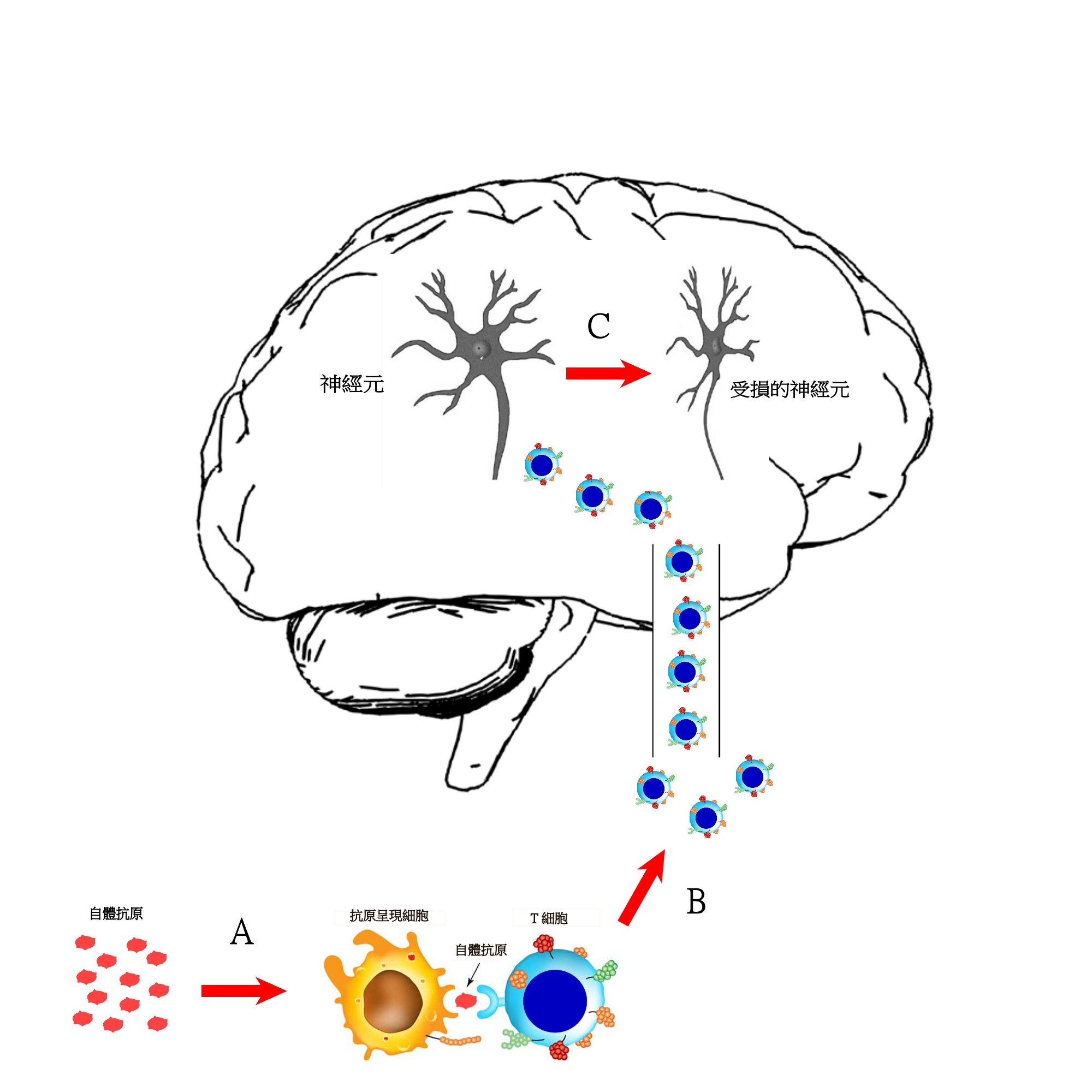 自體抗原在慢性神經退化中的角色
 A. 自體抗原經由抗原呈現細胞活化T細胞
B. 具中樞神經系統抗原特異性的T細胞經由脈管系統進入大腦
C. T細胞引發免疫神經發炎反應造成神經元受損
本校主要研究者之簡介:
黃柏穎主治醫師/助理教授
研究聯繫Email:u99802003@gmail.com
期刊出處: Transl Psychiatry. 2020;10(1):146.
研究全文下載: https://www.nature.com/articles/s41398-020-0826-6
Alzheimer's disease is the
most common dementia and a very complicated central nervous system (CNS)
disease. The etiology is still unclear. Chronic neuroinflammation is considered
to be an important pathogenic factor for Alzheimer's disease, and human leukocyte
antigen (HLA) genes are important genes associated with chronic
neuroinflammation. However, there is still a lack of advanced research on HLA
genotypes. The possible reason is that the high polymorphism and complex
structure in the HLA genome region make research difficult. Previously, the
central nervous system was considered to be a site that can be exempted from
immune influence, but the latest research shows that the lymphatic and glial
lymphatic system can excrete central nervous system-derived antigens and
trigger related immune responses. These self-antigens can be excreted to lymph
nodes outside the central nervous system and presented to T cells through
antigen presenting cells. Therefore, HLA genotyping combined with self-antigen
load has the potential to be used as a biomarker for Alzheimer's disease.
Previously, due to the very complex genomic variation in the HLA region, it was
difficult to perform very precise genotyping of HLA and study the presentation
of self-antigens based on HLA genotyping. Now we can use Next Generation
Sequencing (NGS) with whole exome sequencing technique to establish HLA fine
genotyping and obtain self-antigen load data. We used the above techniques and
found that self-antigen load is associated with the onset of Alzheimer's
disease and self-antigen load of early-onset Alzheimer's disease is
significantly higher than that of late-onset Alzheimer's disease. Such results
not only support the hypothesis that the presentation of self-antigen plays an
important role in Alzheimer’s disease, but also confirm that the presentation
of self-antigen does have the potential as a biomarker for the onset of
Alzheimer’s disease. Our results can also provide useful information regarding
target therapy or pathogenic mechanisms research of Alzheimer’s disease, and
contribute to the development of precision medicine.
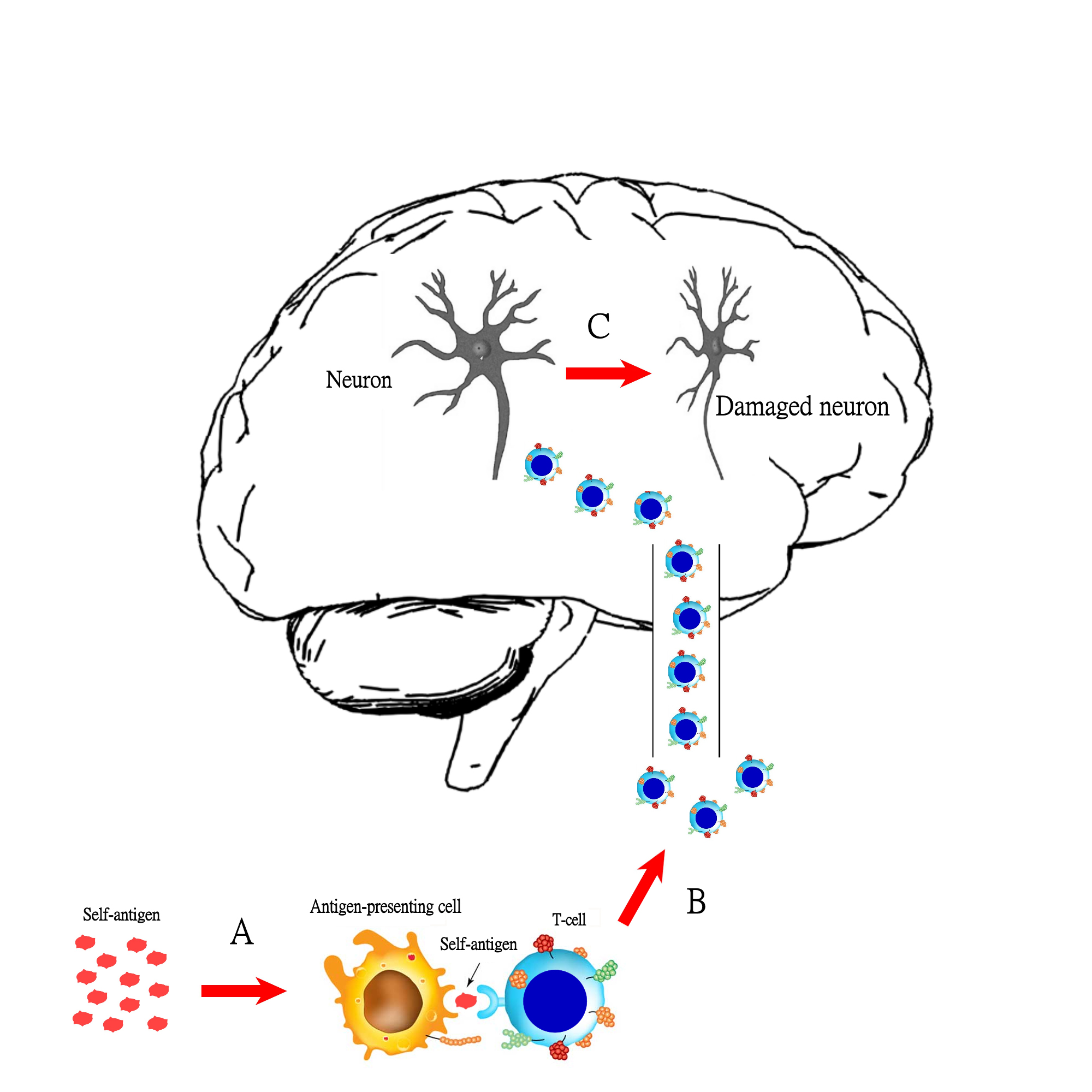
The role of self-antigens in chronic neurodegeneration
A. Self-antigens activated T-cells
through antigen-presenting cells
B. CNS-antigen-specific T-cells
enter the brain through the vasculature system
C. T-cells
induce neuroinflammation which further damages the neuron
Main researcher Intro.
Poyin Huang
Neurologist /Assistant Professor
Author Email
u99802003@gmail.com
Paper cited from:
Transl Psychiatry. 2020;10(1):146.
Research Paper available online on website
吖啶為重要的雜環芳香族化合物,具有多種生物活性,例如抗瘧疾,抗癌和抗白血病,因此,許多研究人員正在努力為吖啶衍生物尋找新的合成途徑。在此研究中,高雄醫學大學的研究人員開發了以酸促進分子內脫酮基偶合反應來合成吖啶。
以往脫酮基反應需在鹼性金屬錯合物、或酶、過氧化物和碘等條件下進行。這些方法大部分都是條件嚴苛或無選擇性,為了改善這個缺點,王志鉦教授團隊發現在無金屬條件下以酸促進酮分子內脫羰反應來合成吖啶衍生物。
這個方法條件溫和,對環境友善,不需過渡金屬催化,並可以使用易取得且低成本的酸在反應中取代貴金屬。重要的是,透過對甲氧基苯丙胺和氯化鈀來證實一氧化碳氣體的產生。此外,這個合成方法也可應用到簡單的芳香族內炔以產生二芳香基酮。
本篇為高雄醫學大學2020年3月份傑出論文得獎文章,代表作者為高雄醫學大學醫藥暨應用化學系教授王志鉦博士。
這項研究於2020年2月19日發表在《有機化學通訊》上,名為“吖啶衍生物的新合成方法”的研究通訊,可在以下網站在線獲取:https://pubs.acs.org/doi/pdf/10.1021/acs.orglett.0c00304 題為“吖啶衍生物的新合成方法”主要作者Ganesh Kumar Dhandabani,通訊作者包括王志鉦博士(高雄醫學大學醫藥暨應用化學系教授)。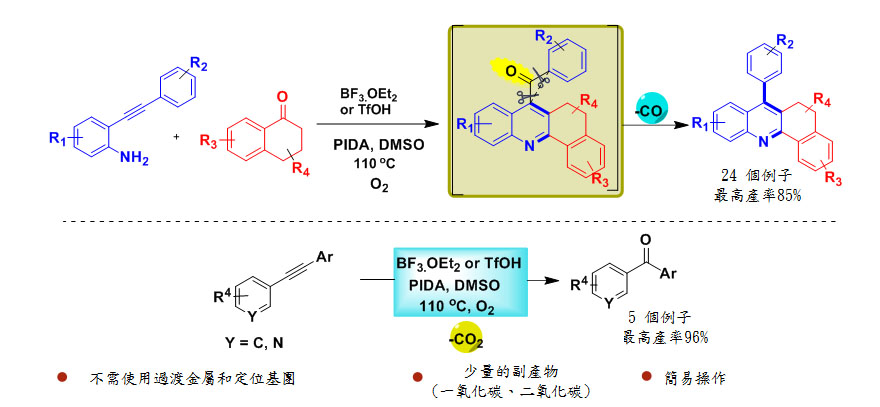
媒體聯繫人:
高雄醫學大學醫藥暨應用化學系教授王志鉦博士
電話:+ 886-7-3121101(轉2275),電子郵件:jjwang@kmu.edu.tw
高雄醫學大學醫藥暨應用化學系博士後研究員 Ganesh Kumar Dhandabani
電話:+886-7-3121101(轉2275),電子郵件:ganechem@gmail.com
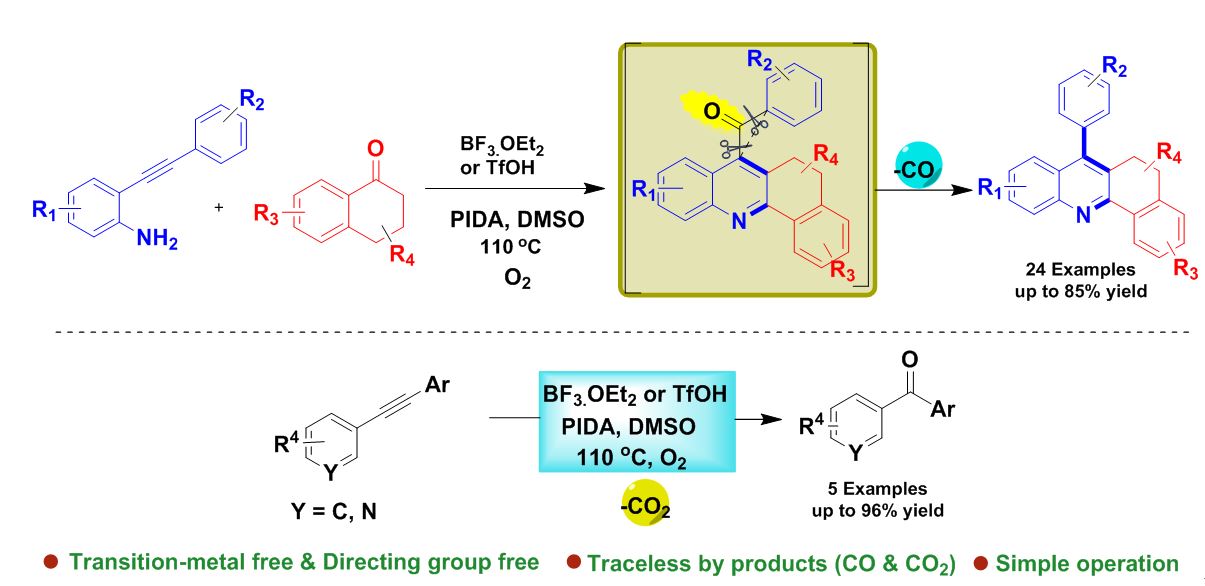
In this study, the researcher at Kaohsiung Medical University developed synthesis of acridines and diaryl ketones under acid promoted intramolecular decarbonylative coupling of unstrained ketone. Acridines are an important class of heteroaromatic compounds that have versatile biological properties, such as antimalarial, anticancer and antileukaemia. Therefore, several researchers are pursuing efforts to create new synthetic routes for acridine derivatives.
The success of intermolecular decarbonylation reactions of aldehyde, thioesters, amides, and anhydrides, intramolecular carbonyl group cleavage of ketone molecules remains challenging. This difficulty is likely due to the substantially inert nature of the C(Aryl)−C(O) bond and its hindered structure, making these motifs unsusceptible to the installation of a directing group. To develop a sustainable C−C bond activation method, basic metal complexes, enzymes, peroxides, and iodine source have been recently employed. The reported methods don’t have selective cleavage/activation of carbon bonds that accompanies transition metal-free C−C bond activation, especially for unstrained C−C bond cleavage. To overcome this drawback, in this study, the scientist Prof. Jeh-Jeng Wang and co-workers found that metal free acid promoted intramolecular decarbonylative of unstrained ketones for the synthesis of acridine derivatives.
The developed protocol is mild condition, environmentally friendly, transition-metal and directing group free, and can replace benchmark expensive noble metals in unstrained C−C bond activation reactions using abundant and low-cost acids. Importantly the liberation of CO gas confirmed by performing experiment with PMA-PdCl2.
This study was published online in Organic Letters on 19th February 2020 as a research communication entitled “Acid-Promoted Intramolecular Decarbonylative Coupling Reactions of Unstrained Ketones: A Modular Approach to Synthesis of Acridines and Diaryl Ketones” and is available online at https://pubs.acs.org/doi/pdf/10.1021/acs.orglett.0c00304.
The lead author of entitled “Acid-Promoted Intramolecular Decarbonylative Coupling Reactions of Unstrained Ketones: A Modular Approach to Synthesis of Acridines and Diaryl Ketones” Ganesh Kumar Dhandabani, Chia-Ling Shih, and corresponding author include Dr. Jeh-Jeng Wang (Professor, Kaohsiung Medical University, Department of Medicinal and Applied Chemistry). This article is award for Kaohsiung Medical University 2020 Monthly Excellent Paper Award in March.
Media Contact:
Dr. Jeh-Jeng Wang, Research fellow, Kaohsiung Medical University, Department of Medicinal and Applied Chemistry Tel: +886-7-3121101(Ext: 2275), E-mail: jjwang@kmu.edu.tw
Dr. Ganesh Kumar Dhandabani, Postdoctoral fellow, Kaohsiung Medical University, Department of Medicinal and Applied Chemistry Tel: +886-7-3121101(Ext: 2275), E-mail: ganechem@gmail.com
Chia-Ling Shih, Undergraduate student, Kaohsiung Medical University, Department of Medicinal and Applied Chemistry Tel: +886-7-3121101(Ext: 2275), E-mail: ymtc9801@gmail.com
新藥開發的寶庫-巨量植物萃取物藥庫的製備與高速篩選
天然藥物開發之困境與契機
一直以來,天然物就是藥物開發的重要來源。但隨著高通量技術的發展,新藥開發轉向了以組合化學為來源的小分子化學合成藥庫。但是過去的實務經驗中也發現:組合化學所製造的小分子化合物藥庫配合高通量篩選的策略,在先導藥物開發的成功率似乎仍無法正比於藥廠所投入的開發資源。許多大型篩選的結果令人失望,研究者也理解了「與生物活性相關的化學空間 (chemical space)多樣性」比化學藥庫的大小(化合物數量)更為重要。分析2001-2019年FDA所通過的新藥物會發現,純化學合成的小分子新藥比率為24.6%;相對的,天然物、天然物衍生物或是藥效基團(pharmacophore)的結構是來自或是源自於天然物的合成小分子藥物等等與天然物相關新藥,再加上植物新藥,全部的比率約占49%。這個結果也顯示天然物仍然是新藥開發中無法取代的資源。而其中一個決定性的因素就是天然物具有多樣化的藥效基團與高複雜度的立體化學。但是天然物的純化需要耗費大量的人力與時間,純化後所得到的化合物,大多也難以應付建構藥庫以及後續驗證實驗所需,因此由天然純化合物所構成的藥庫相當少見,且這些藥庫通常化合物種類都僅在數百種上下。且由於天然物的高複雜度立體化學特性,也大大降低天然物合成的產率,並大大提高合成步驟與困難度。這些因素都讓天然物新藥開發難以應用高通量篩選的模式進行。為了在化學多樣性、藥庫大小、藥庫製備的各種成本之間取得一個平衡點,折衷的觀念因應而生,研究者開始使用劃分層提取物(fractions)進行高通量篩選。將粗萃取物進一步分成數十個至上百個劃分層,由於小量製備便已足夠用於藥庫建置,從而使得規模小型化並且提高製備速度。這些藥庫也相當適合使用高通量篩選進行生物活性測試。而這樣的藥庫配合上靈敏的核磁共振技術能夠解決化合物分離和結構解析的瓶頸問題。
關於本核心平台
主要目標:提供多樣化且穩定之天然物藥庫及高通量篩選服務,發展成為一個優質的天然物新藥開發平台,為產、學界在生技醫藥領域挹注研發量能,促進台灣生物醫學領域與醫藥產業的發展。
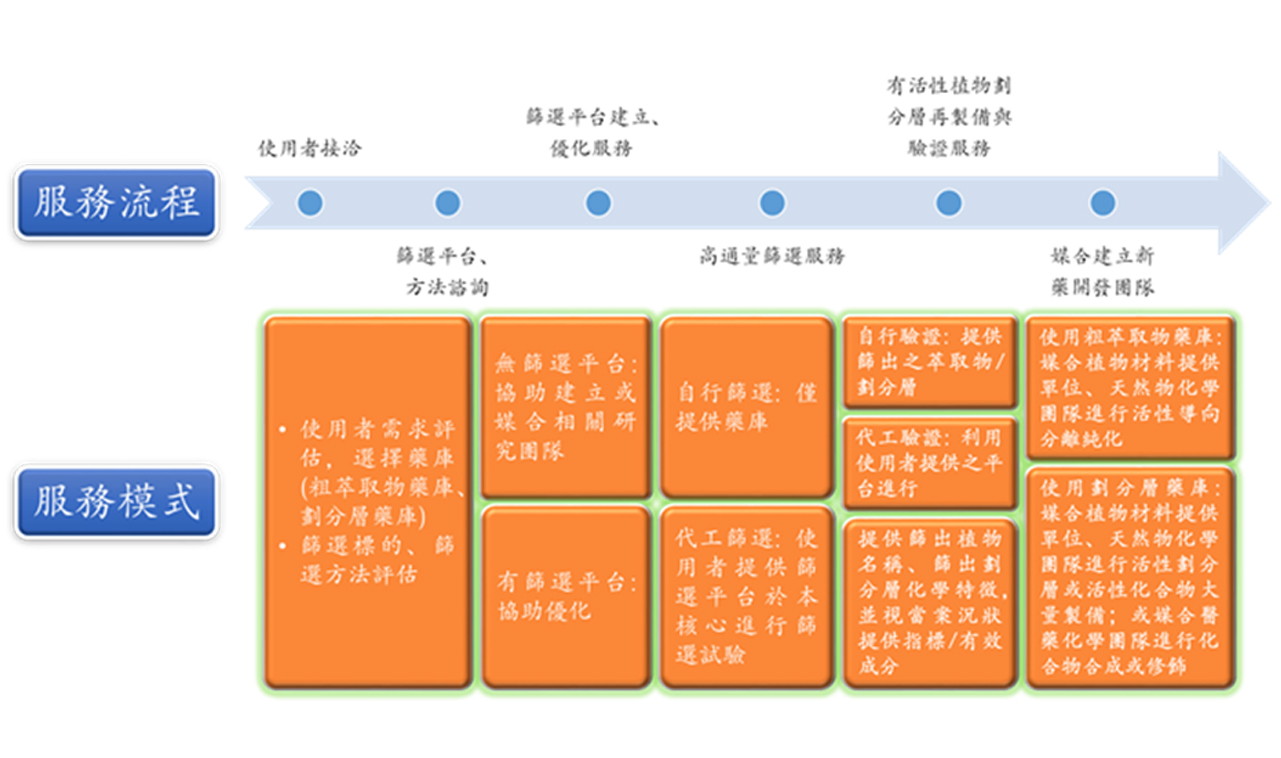
服務模式:本計畫之核心設施服務模式之規畫為整合高雄醫學大學校內現有之天然物資源與高通量篩選儀器設備,提供一站式服飾,包含使用者需求的評估、篩選標的與方法的諮詢、篩選平台的建立與優化、高通量篩選與驗證服務、活性劃分層的化學特徵及指標/有效成分的鑑定、相關研發團隊的媒合。依據使用者的需求,提出固定或客製化的服務模式。
服務能量:本資源平台目前提供3個天然物萃取物藥庫。第一個為台灣本土植物萃取物庫,目前有3,000個甲醇萃取物。第二個為辜嚴倬雲植物保種中心-辜成允植物藥庫,目前有2,889個萃取物。第三個為劃分層藥庫,目前總共有6,240個劃分層。儀器設備方面,本校已經建構有半自動化高通量篩選平台設施,包含:自動化液體工作站、自動化多功能微量盤式分析儀、高內含影像系統。我們的篩選速度大約為每天2,000~4,000個藥物/萃取物。我們能接受各種常見的篩選方法,我們的平台能偵測可見光吸收值、螢光、冷光強度值以及以螢光影像為基礎所建立之篩選方法。過去幾年我們協助使用者發現了豬籠草科與芭蕉科家族植物具有對抗B型肝炎病毒、流行性感冒病毒、以及抗癌的生物活性,已有部分成果發表,相關的專利以及後續研究目前仍正在進行中。
本校主要研究者之簡介:
核心設施負責人:天然藥物研究所顏嘉宏副教授,主要負責藥庫建置、高通量/高內涵篩選服務與推廣之相關工作。
天然物化學研發團隊:高雄醫學大學在天然物的研究領域已有悠久歷史與成果。本核心的協力研發團隊有藥學系張訓碩教授以及天然藥物研究所張芳榮教授、鄭源斌教授(現轉任職於中山大學海洋生物科技暨資源學系,此部份工作為鄭教授於高醫天然所期間所完成)。
植物樣品提供單位:辜嚴倬雲植物保種中心,執行長為清華大學生科院李家維教授。
本核心設施網址: https://nps.kmu.edu.tw/
研究聯繫Email: chyen@kmu.edu.tw
Natural Product Libraries and
High-Throughput Screening Core (NPS Core)
The difficulty and opportunity of drug
discovery from natural products
Natural
products have always been an important source of drug development. However,
with the development of HTS technology, synthetic small molecule compound
libraries which are built based on combinatorial chemistry are the main focus
of drug discovery. Combinatorial chemistry can quickly provide a large number
of small molecule compounds. However, the results of many large screens have
been disappointing in practice. It was recognized that combinatorial chemistry
techniques may not able to fulfill the expectation that could provide all the
chemicals needed for successful lead discovery. Researchers have also realized
that “chemical diversity” is more important than the size of libraries (number
of compounds). Analysis of the new approved therapeutic agents by US FDA from 2001
to 2019 revealed that 24.6% are synthetic drugs; by contrast,49% are natural
products, natural derivatives, synthetic compounds derived from natural product
pharmacophores, or botanic drugs (mixture of natural compounds). One of the
decisive factors is that natural product collections exhibit a wide range of
pharmacophores and a high degree of stereochemistry. This indicated that
natural products are still an irreplaceable resource for drug discovery. However,
it is a time- and labor-consuming work to isolate pure compounds from natural
materials; and usually only limited variety and quantities of pure compounds
are obtained. In addition, the high stereo-chemical diversity properties of
natural products also hugely increase the difficulties in synthesis of natural products.
Thus, pure compound library of natural product is not commonly available. These
factors make it difficult to apply HTS approaches for drug discovery from
natural product. In order to strike a balance between chemical diversity, drug
library size, and various costs of drug library preparation, researchers have
begun to use pre-fractioned library for HTS. A crude extract is divided into
tens to hundreds of fractions. Small quantities of crude extracts are enough
for the preparation of library with large number of fractions for biological
tests. Furthermore, the bottleneck of the isolation and structure-elucidation
of active component in fractions can also be addressed by sensitive NMR
techniques.
About
NPS Core lab
Goal: Providing diversified
and stable natural product libraries and high-throughput screening services;
and becoming a high-quality platform to help natural product drug discovery
research of academic and industrial fields.
Our
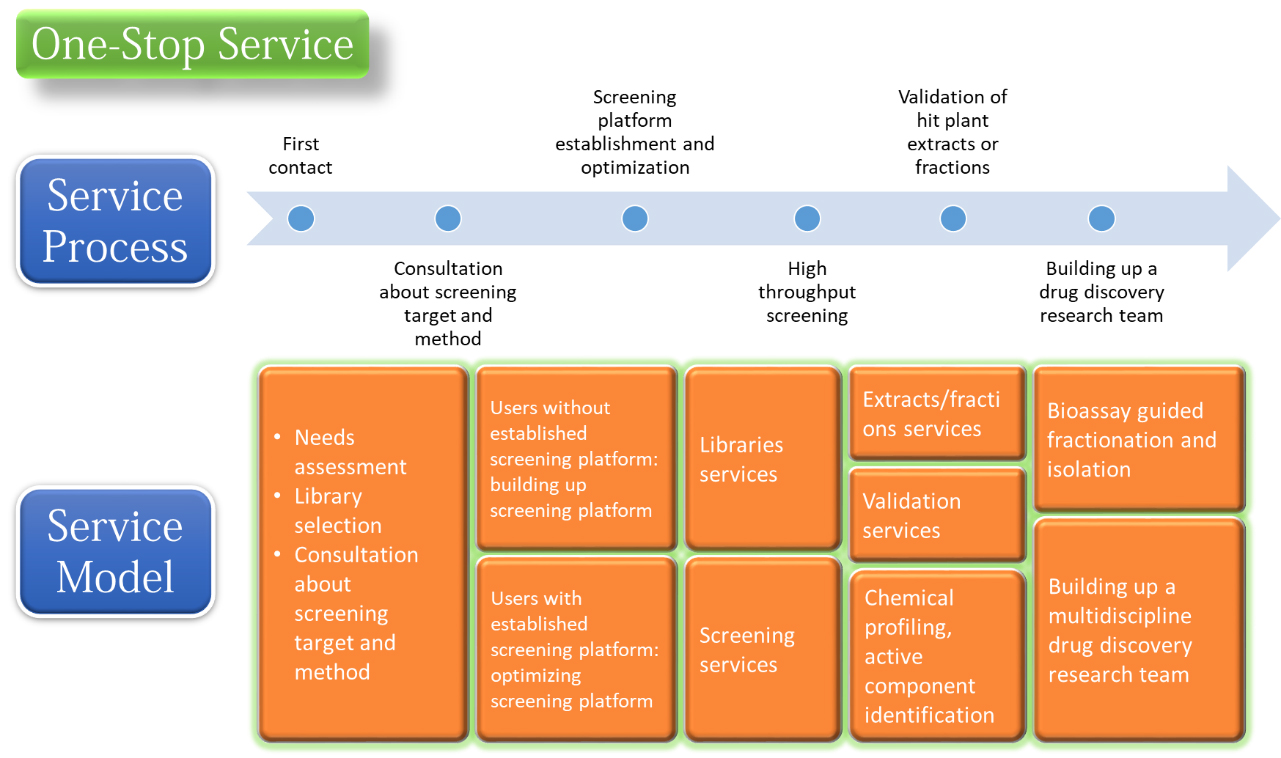
service: This platform integrates the existing natural product resources and
high-throughput screening equipment in KMU. Our service starts with a
consultation with users on the ultimate goal, target and assay methods of
screening, establishment and optimization of screening assay, high-throughput
screening, hits verification, chemical characterization of active fractions,
and identification of indicators/active ingredients. We will bridge user and
our supporting laboratories to build a drug discovery research team. According
to users demand, customized services is can be integrated with our standardized
models. Our capacity: We offer three natural product libraries. The first one
is the Taiwan indigenous plant extract library, which contains extracted 3,000
extracts. The second library is Dr. Cecilia Koo Botanic Conservation Center
(KBCC)-library, which contains 2,889 extracts. The third library is
pre-fractioned library, which contains 6,240 fractions. We equipped with an
automatic liquid handling workstation, an automatic multimode plate reader, and
a high-content system. Our screening capacity is around 2,000~4,000 tests/day.
Absorbance, fluorescence, luminance, or image based assays are all applicable
on our platform.
Main researcher Intro.
PI
of NPS Core: Chia-Hung Yen, (Associate Professor, Graduate Institute of Natural
Products) who responsible for the management, construction and maintenance of
natural product libraries and high-throughput/high content screening services.
Natural
product chemistry teams: KMU has long and rich experience on natural product
research. Thus, we have strong supported labs led by Prof. Hsun-Shuo Chang at School
of Pharmacy, and Prof. Fang-Rong Chang and Prof. Yuan-Bin Cheng at Graduate
Institute of Natural Products. (Prof. Yuan-Bin Cheng currently teaches at Department
of Marine Biotechnology and Resources, National Sun Yat-Sen University.
Extracts preparation for libraries construction was carried out by Prof Cheng’s
lab in KMU)
Plant
material supporting team: Dr. Cecilia Koo Botanic Conservation Center of which
Prof. Chia-Wei Li at Institute of Molecular and Cellular Biology, National
Tsing Hua University is the CEO.
Website
of NPS Core: https://nps.kmu.edu.tw/
E-mail
address of CH Yen: chyen@kmu.edu.tw
版權所有 © 2021-2025 高雄醫學大學

